Why Museums Need to Rethink Care, Ownership, and Responsibility.
This is an edited post that was first published 11 Sept 2026.
Part 1: Ancestors Are Not Museum Collections
Note from Sandra Shakespeare, Founder & Executive Director of Museum X
“This article is a part of a new Museum X series written by Livi Adu, our e-Curator in residence. These provocations aim to continue open conversations: not just who gets invited into museums, but what happens once people arrive, and whether participation ultimately leads to agency, authority and meaningful change.
These posts are not intended to offer fixed answers.
They are part of Museum X’s ongoing invitation to question practice, share learning and create dialogue across the sector and with the communities we work alongside. We’d love to hear what resonates, what you would challenge, and what these questions look like in your own practice“
Content warning & Reader care
This post discusses ancestral remains, colonial violence, enslavement, racial science, death, museums, and the desecration of Black and African bodies.
Please pause, step away, breathe, and return when you need to.
At Museum X, we are interested in how museums hold difficult histories without causing further harm. That means integrating trauma-informed practice, emotional care, and collective resilience into our work so we can heal together.
Introduction: At what point does a person become an object?
Have you ever thought about the point at which a human becomes an object in a museum?
Is it when the body is removed from their grave, placed in storage, assigned an accession number, photographed, digitised, or uploaded to a collections database?
These questions matter because museum language often softens violence. Words such as “collections”, “holdings”, “specimens”, “accessioned material” and “research resource” can sound neutral and administrative. But beneath those terms are people. Ancestors. Loved ones who did not consent, and whose descendants were rarely asked.
Digital collections raise further questions.
Should images of ancestors be openly accessible?
What does consent mean when human remains become data?
Human remains should not become objects because a museum catalogue says so. As the Laying Ancestors to Rest: Policy Brief produced by All-Party Parliamentary Group on Afrikan Reparations (APPG-AR) states,
ancestors are “not commercial objects but human beings”.
So we have to ask: who benefits when museums describe ancestors as objects?
This is not simply a question of language.
It is a question of power.
At Museum X, we are not asking museums to add new labels, or programme another conversation about decolonisation. We are asking something deeper: what do museums need to become if they are serious about justice, care, repair, ownership and cultural memory?
And to begin answering that, as museums, we must check our policies, narrative, and privilege.
Through projects such as Black Beyond Data: Working with Descendant Communities, Museum X has been exploring how ethical frameworks emerge through relationships rather than policy documents alone. One recurring theme is that communities are rarely asking for more access to difficult histories at any cost.
More often, they ask different questions:
Who made these decisions?
Who benefits?
Who is accountable?
And what forms of care are owed to those whose lives, bodies and histories continue to be held within museum collections?
The colonial afterlife of museum collections
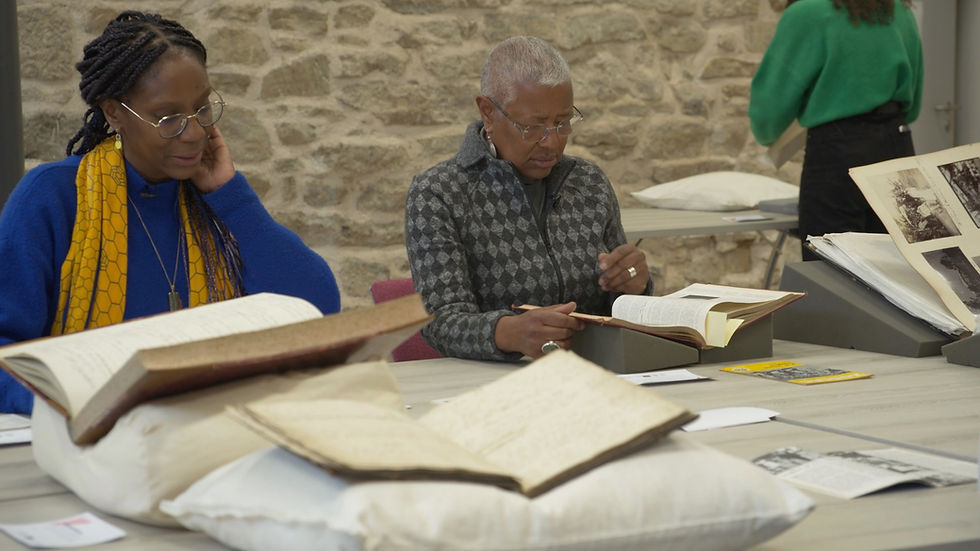
The issue is not simply that ancestors were badly catalogued, stored or interpreted. The deeper issue is that many were taken through colonial violence, the effects of which continue today. As the APPG-AR report notes, museums contribute to
“continuous acts of displacement and objectification”.
A collector’s name is preserved. A donor’s route is recorded. An expedition is documented. A military context may be noted. A shelf location is assigned. Yet the person whose body was taken is too often unnamed, unknown, or made unknowable by the very violence that removed them.
This is not just poor collections management. It is colonial violence with paperwork.
The scale of this legacy is significant. A 2026 Guardian investigation found that UK institutions hold over 263,000 items of human remains, including over 37,000 known to originate overseas.
This raises difficult questions about what museums mean when they speak of care.
What does it mean to care for ancestors while retaining control over them?
What does preservation mean if it preserves the conditions of their displacement?
What does access mean to those with the least power over what happens to their ancestors?
Ancestral remains cannot be separated from the histories of colonialism, enslavement and dehumanisation through which many were acquired. Acknowledging those histories is important.
But acknowledgement alone is not accountability.
The challenge for museums is not simply to recognise how ancestors came into their collections, but to consider what responsibilities flow from that knowledge today.
The law, justice, and ethics are not synonymous

In the UK, the policy landscape around human remains in museums is full of gaps, exemptions and uncomfortable silences. The principal government guidance still dates from 2005 and is now under formal review, with updated guidance expected to be published in autumn 2027. The Human Tissue Act 2004 provides important protections in some contexts but leaves many ancestral remains outside its strongest requirements.
In practice, this creates a hierarchy of dignity. The often-cited 100-year rule is not an ethical framework. It does not answer questions of consent, address colonial violence, or explain why institutions should hold greater authority over ancestors than the communities from whom they were taken.
“We do have consent over our bodies after death in the medical profession. And the same should apply [in the anthropological museum]... You have autonomy over your body, even in death.”
— Provenance researcher, quote from APPG-AR report
There is also no clear national restitution policy for ancestral remains in the UK, and no independent national body with the power to resolve claims. Too often, decisions remain with the institutions that hold the ancestors.
However, the Museums Association’s 2025 Code of Ethics does try to address this by calling for
“museums to be clear about why they hold these items and to take an open, proactive and positive approach to repatriation.”
When law, policy and institutional discretion are treated as enough, museums risk mistaking compliance for care. The questions should not simply be'Are we allowed to keep them?' but,
What is our responsibility for repairing harm?
'But museums don’t have the resources…'
Museums are underfunded. Staff are stretched. Provenance research, consultation, documentation and repatriation require time, money and specialist knowledge.
But lack of resources cannot become a moral hiding place.
If institutions found the resources to collect, classify, store, display, and benefit from ancestors, then the sector and the state must find the resources for repair, return, reburial, restriction and care.
This is not about blaming individual museum workers. It is about accountability across boards, funders, policymakers, senior leaders, universities, and governments.
Complex does not mean impossible.
Sensitivity does not mean it should be avoided.
Underfunded does not mean unaccountable.
The burden cannot continue to fall on descendant communities to prove why their ancestors deserve dignity.
What do museums need to become?

Museums don't simply need better policies. They need to become different kinds of institutions.
Institutions that prioritise:
Care over possession.
Accountability over reputation management.
Shared authority over institutional ownership.
Repair as well as interpretation.
Community power, not just consultation.
Holding memory relationally, not extracting it into object records.
This means accepting that care may sometimes look like non-display, restricted access, reparation, reburial or letting go.
It requires transparent inventories, funded provenance research, meaningful pathways for return, and digital ethics that recognise images, scans and records of ancestors as sensitive material, rather than automatically open data.
At Museum X, our work has always been about more than representation. We are not asking museums to add Black history as a programme, a theme, or a month. We are asking institutions to confront what they have normalised, and to recognise that repair begins with truth.
Where do we go from here?
If museums are serious about justice, they must be willing to change their systems: their collection policies, governance structures, documentation practices, interpretation, funding priorities, and digital access decisions.
This is not simply about returning ancestors. It is about returning humanity to museum practice.
The questions below are offered as a starting point for reflection.
3 Reflection Questions for Museum Professionals:
1. Are we treating ancestors as people, or as collections?
2. Who has power over what happens next?
3. What are we protecting: ancestors, communities and truth, or the institution?
Museum X does not claim to have all the answers. But we believe museums must be willing to ask better questions.
How do we move beyond possession towards stewardship?
What would change if care, rather than ownership, became the starting point?
These questions do not end with human remains. The same institutional systems that decide how ancestors are described, stored, interpreted and accessed also shape which histories are preserved, whose knowledge is recognised, and which stories are treated as central or peripheral.
If care requires museums to rethink their relationship with collections, it also requires us to think about their relationship with history itself. Black history is still too often approached as an addition: something programmed for a particular month, presented through a temporary exhibition, or separated from the wider histories museums tell about Britain.
So how do we change how we engage with Black British history, from a history ‘add on’ to an embedded part of our national inheritance?
We invite museum professionals, archivists, researchers, community practitioners and cultural organisations to join the conversation. Through projects such as Black Beyond Data and our wider work with communities, archives and collections, we continue to explore such provocations as:
How is your institution approaching tough questions?
What approaches to care, accountability ,and shared authority could change museum practice?
We’d love to hear from you. Contact: livi@themuseumx.com
References and Further Reading
https://www.themuseumx.com/projects/it's-about-handing-over-power
https://www.muchaduabout.com/post/museum-data-ethics-collections-erase-people
https://www.gov.uk/government/publications/guidance-for-the-care-of-human-remains-in-museums
https://www.appg-ar.org/news/report-laying-ancestors-to-rest-2025
https://media.un.org/unifeed/en/asset/d354/d3548557
About the Author: Livi Adu
Livi Adu is Museum X’s e-Curator, working across digital heritage, research, interpretation and socially engaged museum practice. Her work explores questions of power, ethics, representation and accountability in museums and cultural heritage, with a particular interest in how collections, archives and digital technologies shape whose knowledge is preserved, shared and valued.
This article is part of a Museum X series in which Livi explores some of the difficult questions facing museums today: from care, ownership and representation to participation, knowledge and institutional power.
Alongside her work with Museum X, Livi writes and researches through Much Adu About, where she explores museums, heritage, digital culture, ethics and the ideas emerging through her wider practice.
Explore more of Livi’s work at muchaduabout.com.

Comments